
Dr. Vincent Felitti’s unexpected discovery

In 1985, Dr. Vincent Felitti, a doctor of preventive medicine, was running a study at his obesity clinic, which was focused on helping overweight patients lose weight. Over time, he noticed that 50% of the patients in his obesity clinic were dropping out. This was not the most surprising part. After all, weight loss is not easy for most people.
What surprised and confused him was that all of the patients who were dropping out were actually doing great in the study. They were losing weight consistently and their health was improving.
So, why were these patients dropping out?
Dr. Felitti was not one to leave interesting questions unanswered. He asked questions and explored until he learned two very interesting things.
- All of the female patients who dropped out of the study had been sexually abused or assaulted at some point in their lives. Many reported feeling unsafe in their bodies and more exposed when they lost weight.
- There were several factors having to do with traumatic life experiences that affected overall physical health for all of his patients. The risks of heart disease, stroke, diabetes, high blood pressure, and ultimately death were consistently higher in patients who had experienced multiple adverse childhood events.
The ACE Questionnaire
To be able to assess risk factors moving forward, Dr. Felitti developed a questionnaire that he called the Adverse Childhood Experiences (ACE) questionnaire. The questionnaire lists 10 different types of adverse childhood events that are predictive of poor health in the future. Patients who have had four or more of those experiences early in life are at higher risk for both mental and physical illness. Doctors still use this measure today.
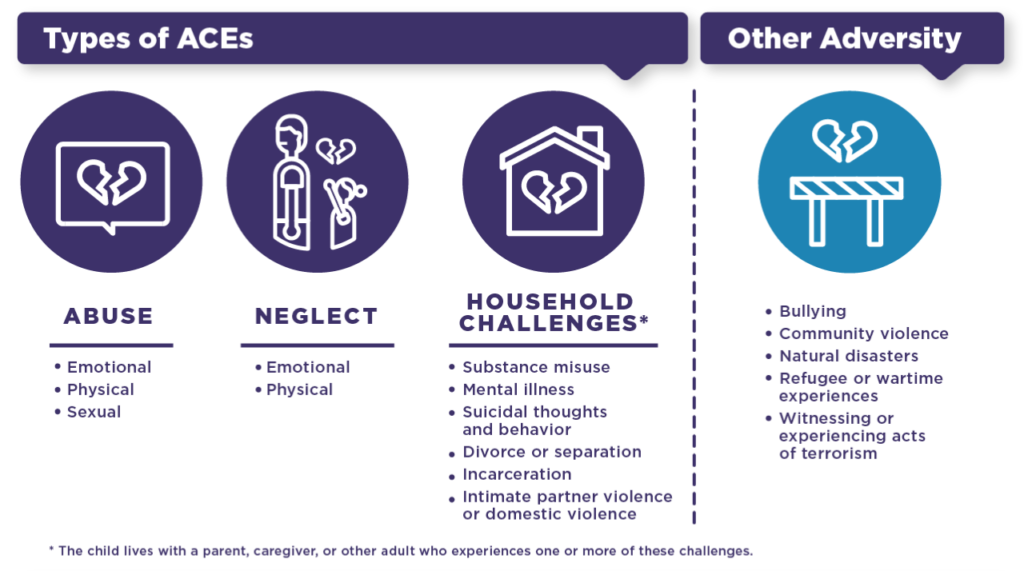
Take the ACE questionnaire here: https://acestoohigh.com/got-your-ace-score/.
Now what?
If you took the ACE questionnaire and scored higher than 4 points, you might start to feel a bit nervous. Does this mean that you are doomed to get sicker and live a shorter life than your peers? Is your story already written?
Absolutely Not.
Just like physical trauma, psychological trauma can be treated and even healed. Therapy is not just a source of comfort, or indefinite emotional support. Therapy is a form of treatment and it has an end goal. The path may be long, sometimes even lasting for years. Nonetheless, it is a path towards healing.
Additional Reading
You can read more about Dr. Felitti’s astonishing experiences with his patients by going to this website: https://acestoohigh.com/2012/10/03/the-adverse-childhood-experiences-study-the-largest-most-important-public-health-study-you-never-heard-of-began-in-an-obesity-clinic/.