

What does EMDR stand for?
The acronym EMDR stands for “Eye Movement Desensitization and Reprocessing.” This is an evidence-based psychotherapy designed to help people heal from psychological trauma.
How and why does EMDR work?
There are many theories behind how EMDR works, and they are all plausible. Our brains are very complex and doing certain types of studies would be unethical. But below are a couple of theories that are supported by research and shed some light into why EMDR works.
For people who have experienced significant traumas, a traumatic memory can be “stuck” in a certain form that is not complete. For example, people who have experienced traumas at a very young age might experience their traumatic memories as visual images or body sensations, without being able to put the experience into words. The opposite can be true as well — people can be disconnected from their body sensations and just hold a verbal narrative of the experience. And of course there are many variations in the middle. During EMDR, the memory can become “unstuck” and be resolved in a more complete way.
Another reason EMDR can be effective is because it requires the person to do another task while processing a traumatic memory. The physical task in EMDR, like moving the eyes to follow a light from side to side, means that your attention is not 100% focused on the memory. This way, the intensity of the memory and the emotions associated with it are less overwhelming.
How do you do EMDR?
One unique feature of EMDR is that it involves very little talking. A lot of the work is done silently and internally. There are several steps that we do sequentially during the EMDR session.
Here is the general outline:
- We start the same way all therapies start — by going over the highlights of your life story, doing an assessment for symptoms, learning about current life stressors and social supports, and coming up with treatment goals.
- Then, in preparation for the actual bilateral stimulation, we create a framework and choose a “Negative Cognition” that will be the focus. “Negative Cognition” is a fancy way of saying “hurtful/painful thought.” Examples of Negative Cognitions include statements like, “I am worthless,” “I am unsafe,” “I am a failure,” and so on. Once the Negative Cognition is chosen, we choose a specific memory & image (or thought, for people who have trouble with imagery) which triggers that negative thought. We also choose a “Positive Cognition” that is the goal of the session. Those would be statements like “I am worthy,” “I am safe,” and “I can succeed.”
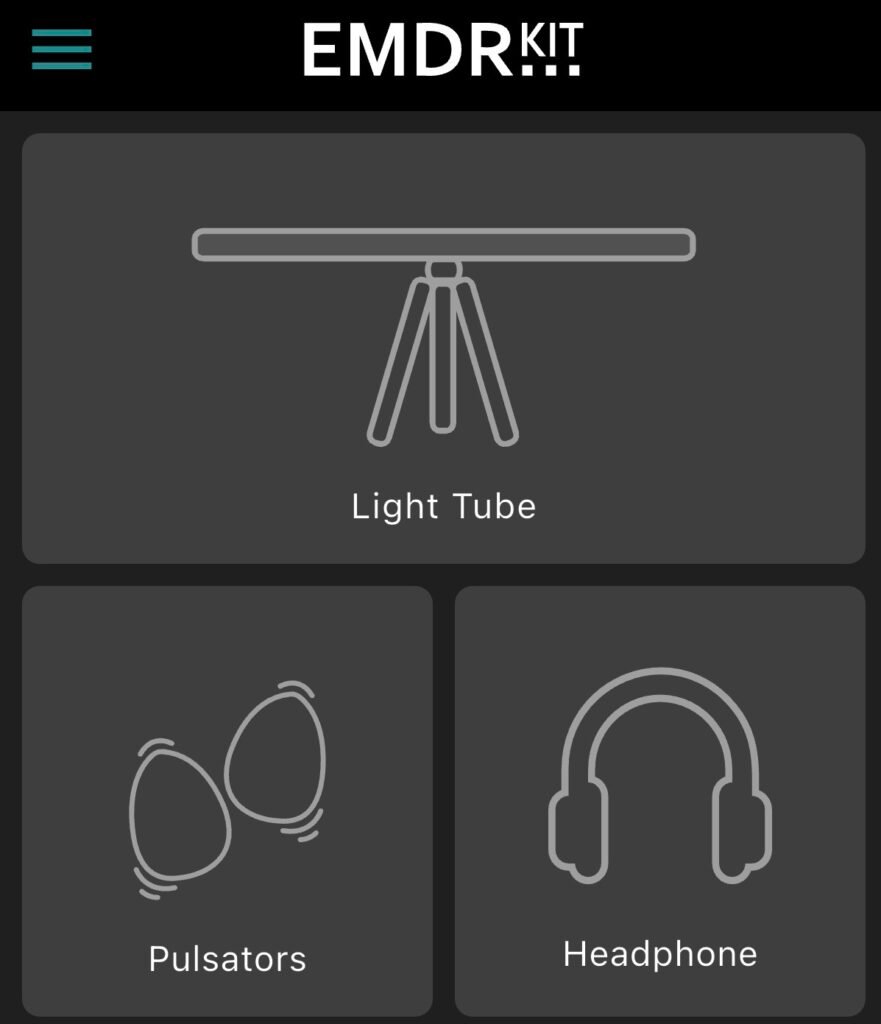
- Once this framework is clear, the bilateral stimulation starts. This means that the lightbar is set up and you will have sets of about 30 -90 seconds of following a little light with your eyes from side to side while thinking of the negative cognition and the traumatic memory. After each set, the therapist will check in to see how you’re doing and track progress.
- It’s important to note that there will also be some safety planning in the beginning and an agreed upon signal for when the processing is feeling overwhelming and you need to stop.
- In cases when you get overwhelmed, there are many techniques that therapists know that will help you regulate again.
- It is rare that a memory is fully processed in just one session. Most often, you will get as far as you can in a session, create a plan for how to remain present in your daily life between sessions, and then return to the process until you fully believe the Positive Cognition and fully disbelieve the Negative Cognition. This may seem impossible, but it happens all the time through EMDR.
- Once the Positive Cognition is believed, there will be some more sets of bilateral stimulation to “install” that thought so that the effects stay with you.
If this seems like a lot, don’t despair. You don’t have to remember any of it. Your therapist will know exactly what to do and how to guide you.